It is easy to look at modern sport and assume that women's success was inevitable.
Packed football stadiums. Olympic champions. World title fights. Household names appearing on television screens every week.
Yet the reality is that many of today's female athletes are succeeding in a sporting world that, for much of the last century, actively tried to keep women out.
The progress has been remarkable, but it should never be taken for granted.
Perhaps nowhere is this story more striking than in football.
Many younger supporters are surprised to learn that women's football was once enormously popular in England. During the First World War, women's teams attracted large crowds as men served overseas. The most famous side, Dick, Kerr Ladies F.C., regularly drew thousands of spectators and became one of the most successful teams of the era.
On Boxing Day 1920, a match between Dick, Kerr Ladies and St Helens Ladies attracted a crowd of more than 50,000 spectators at Goodison Park, with thousands more reportedly locked outside.
At the time, it was one of the largest attendances ever seen for a women's sporting event.
Then came the ban.
In 1921, the The Football Association prohibited women's football from being played on affiliated grounds, arguing that football was "quite unsuitable for females". The ban remained in place for fifty years.
Think about that for a moment.
Half a century.
Generations of talented players never had the opportunity to pursue the game in the way male players could.
The impact was profound.
While men's football became a global industry, women's football survived largely through determination, volunteers and players who simply loved the game.
Yet history has a habit of turning full circles.
When England's Lionesses won the UEFA Women's European Championship in 2022, the scenes at Wembley felt significant far beyond football itself. More than 87,000 supporters watched England defeat Germany in the final, creating a record attendance for any European Championship final, men's or women's.
For those who understood the history, it felt like a moment of justice.
The sport that had once been banned was now being celebrated on one of football's biggest stages.
The success of players such as Leah Williamson, Lucy Bronze and Beth Mead helped transform perceptions of women's football across the country.
Young girls suddenly had role models they could see, watch and aspire to become.
Visibility matters.
That lesson extends beyond football.
In boxing, the transformation has been equally remarkable.
For decades, female boxers fought not only opponents but prejudice. The idea that women could headline major boxing events was often dismissed.
Today, that argument looks outdated.
Few athletes have changed perceptions more dramatically than Katie Taylor. The Olympic gold medallist became one of the most influential figures in modern boxing, helping elevate the women's game to levels few imagined possible.
Her historic bout against Amanda Serrano at Madison Square Garden in 2022 was more than a title fight. It was a landmark moment for women's sport. For the first time, two women headlined boxing's most famous arena and delivered a contest that exceeded expectations.
Across Britain, fighters such as Natasha Jonas and Savannah Marshall have continued to raise standards and visibility.
The growth of women's boxing has not happened because opportunities were handed out.
It happened because athletes repeatedly proved they belonged on the biggest stages.
Athletics tells a similar story.
Long before sponsorship deals and social media followings, women were challenging assumptions about what they could achieve.
Figures such as Dame Kelly Holmes inspired a generation through her remarkable double gold medal success at the Athens Olympics in 2004. Her victories in the 800 metres and 1500 metres remain among Britain's greatest Olympic achievements.
More recently, athletes such as Dina Asher-Smith and Keely Hodgkinson have become symbols of excellence for a new generation.
Their achievements are significant not only because they win medals but because they continue to normalise female success in elite sport.
That may be the most important change of all.
Today's young supporters grow up expecting women to compete on the biggest stages.
For previous generations, that expectation simply did not exist.
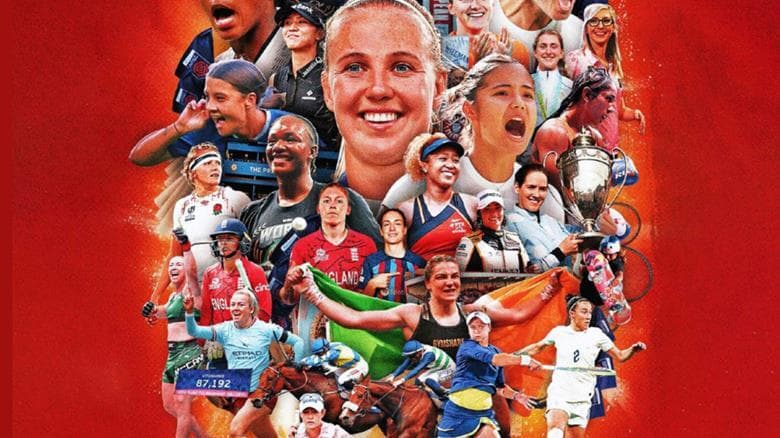
The transformation can be seen everywhere.
Women's football fills major stadiums.
Women's rugby attracts growing audiences.
Women's cricket enjoys increasing visibility.
Female athletes appear in advertising campaigns, documentaries and mainstream sporting discussions.
Progress has been substantial.
Yet challenges remain.
Questions around funding, media coverage, facilities and pathways into professional sport continue to be debated. Equality in sport is not a destination that has already been reached. It is an ongoing process.
Perhaps that is why understanding the history matters.
The success of today's athletes did not emerge overnight.
It was built on decades of persistence by women who often received little recognition and even less support.
They played because they loved the sport.
They competed because they believed they belonged.
They continued despite barriers that would have discouraged many others.
Every generation builds upon the efforts of those who came before it.
The Lionesses lifting trophies, Katie Taylor headlining arenas and British athletes standing on Olympic podiums are all part of the same story.
A story of resilience.
A story of determination.
A story of barriers being challenged and assumptions being rewritten.
Most importantly, it is a story that remains unfinished.
The next chapter is already being written by young girls kicking footballs in parks, stepping into boxing gyms and dreaming of Olympic finals.
For them, opportunities exist that previous generations could scarcely have imagined.
And that may be the greatest victory of all.
Sports Lounge Editorial
The Sports Lounge editorial team
The Sports Lounge editorial team brings together writers, former professionals and analysts who believe sport deserves thoughtful, considered conversation.