
Sport has never simply been about what happens on the field.
The greatest sporting memories are rarely confined to the final score. People remember the atmosphere, the anticipation, the stories, the personalities and the feeling of being part of something bigger than themselves.
In this respect, American sport has long understood something that many British sporting organisations are only beginning to embrace: fans are not just buying a ticket to watch a game. They are buying an experience.
For many traditional British sports supporters, that idea can feel slightly uncomfortable. Football, rugby and cricket have always relied on the strength of their history and authenticity. The sport itself was enough.
Yet in an increasingly competitive entertainment landscape, where audiences can choose between streaming services, social media, gaming and countless other distractions, sport is competing for attention in ways it never had to before.
American sport recognised this decades ago.
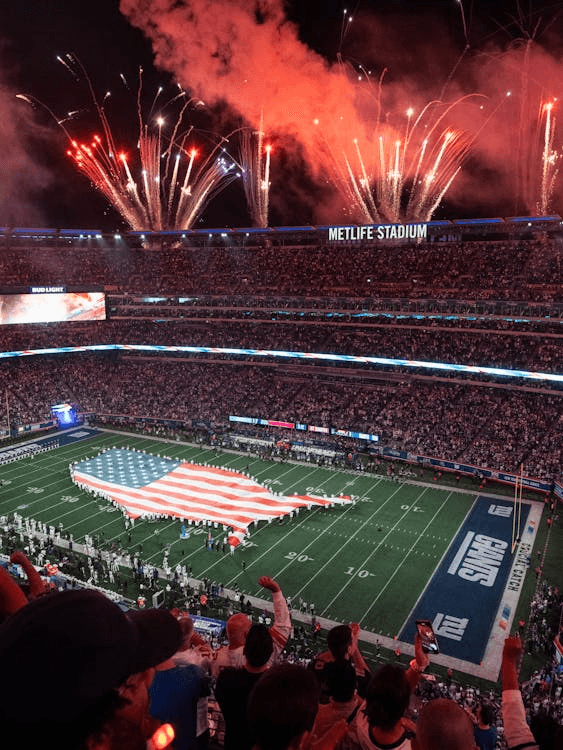
Take the NFL. A regular season game between two mid-table teams can feel like a major event. From the moment supporters arrive at the stadium, there is a sense of occasion. Giant screens tell stories, player introductions are carefully choreographed, music builds anticipation and every element of the experience is designed to make the supporter feel involved.
None of this changes the sport itself. The players still have to perform. The result still matters. But the presentation elevates the experience.
British sport often undersells itself.
Anyone who has experienced a packed Anfield on a European night, a Six Nations match in Cardiff, or the final day of an Ashes Test at Lord's understands that British sport possesses some of the greatest atmospheres in the world. The emotion is already there.
The challenge is that too often we assume people automatically understand its significance.
American sport rarely makes that assumption.
One area where the United States consistently excels is storytelling. The NFL, NBA and other major leagues understand that supporters connect with people before they connect with statistics.
Fans know where players came from. They understand rivalries. They know the obstacles athletes have overcome and the journeys that brought them to the biggest stages.
By the time a championship game arrives, supporters are emotionally invested because they understand the story.
British sport has countless stories of its own, but they are not always told effectively.
How many football supporters know the personal journeys of academy graduates breaking into first teams? How many casual rugby supporters understand the sacrifices players make to reach international level? How many cricket fans are introduced to the personalities behind the scorecards?
The stories exist. They simply need to be shared more effectively.
Perhaps the best example of the power of presentation can be found in Formula One. The sport itself did not fundamentally change when Netflix launched Drive to Survive. The cars remained the same. The circuits remained the same. The rules remained largely unchanged.
What changed was the storytelling.
Millions of new fans suddenly understood the personalities, rivalries and pressures that existed behind the scenes. People who had never watched a Grand Prix became emotionally invested because they felt connected to the people involved.
The lesson is simple.
People connect with people.
Not spreadsheets. Not statistics. Not league tables.
Stories.
American sport understands this instinctively.
The fan experience is another area where British sport can learn valuable lessons. In the United States, attending a sporting event is often viewed as a full-day experience. Stadiums are designed with families in mind. Food, entertainment, hospitality and technology are integrated into the matchday.
The game remains the centrepiece, but everything surrounding it is designed to add value.
This does not mean British football grounds should suddenly resemble Las Vegas. Authenticity remains one of British sport's greatest strengths. Supporters do not want artificial noise replacing genuine atmosphere.
But there is a difference between preserving tradition and resisting improvement.
Supporters appreciate better facilities. They appreciate improved hospitality. They appreciate easier access to information and technology. Most importantly, they appreciate feeling valued.
American sport generally excels at making fans feel part of the product.
That philosophy extends beyond stadiums. The NFL's international growth has been built on understanding how supporters engage with content, merchandise, events and experiences. Every interaction feels deliberate.
Nothing is left to chance.
That level of professionalism is something every sporting organisation can learn from.
The future of sport will not belong solely to those with the best athletes or biggest budgets. It will belong to those who create the strongest emotional connections.
British sport already possesses extraordinary assets. The history is richer. The rivalries are deeper. The supporter culture is often unmatched.
What American sport demonstrates is how powerful those assets can become when they are presented effectively.
The objective is not to become more American.
The objective is to become better at showcasing what already makes British sport special.
Tell the stories better.
Celebrate the personalities more.
Create stronger experiences.
Think beyond the final score.
Because long after supporters forget the result, they remember how the occasion made them feel.
And ultimately, that feeling is what keeps people coming back.
Majid Lavji
Founder & Editor
Majid Lavji is the Founder and Editor of Sports Lounge. With more than 30 years of experience across sport, media and business, he is passionate about telling the stories behind the games we love. Through Sports Lounge, he aims to provide intelligent, engaging sports journalism that values insight, history and context as much as results and headlines.