
There was a time when American football in Britain felt like a curiosity.
For many people, it was a sport glimpsed briefly on late-night television or in Hollywood films. The rules seemed complicated, the matches appeared slow and the culture surrounding the game felt distinctly American. While sports such as football, rugby and cricket had deep roots stretching back generations, the NFL appeared to belong to a different world entirely.
Yet something remarkable has happened over the past three decades.
Without fanfare or sudden revolution, the National Football League has steadily built one of the most loyal and passionate overseas fanbases anywhere in the world. What was once regarded as a niche interest now attracts substantial television audiences, sold-out stadiums and dedicated supporters who follow teams thousands of miles away from home.
The rise of the NFL in Britain is one of the most successful sporting expansion stories of modern times.
To understand how it happened, it is worth remembering where it began.
For many British sports fans of a certain age, the first real introduction to American football came during the 1980s. Channel 4's coverage brought the NFL into living rooms across the country and introduced viewers to a sport unlike anything they had previously seen.
The timing proved important.
Britain was already a nation of sports lovers. Supporters understood competition, rivalry and tradition. What American football offered was something different rather than something familiar. The spectacle, the strategy and the sheer scale of the NFL stood apart from anything else available on British television.
Presenters such as Gary Imlach and commentators including Mick Luckhurst became unexpectedly important figures in helping British audiences understand the game.
The NFL was no longer a strange American import.
It became a sport people could follow.
The league itself recognised the opportunity.
Unlike many sporting organisations that focused almost exclusively on domestic audiences, the NFL understood early that future growth would require international expansion. Britain, with its established sporting culture, large population and close cultural links to the United States, represented an obvious target.
Yet the NFL's success was not achieved through advertising alone.
It understood something many sports organisations still struggle to grasp.
People support experiences before they support products.
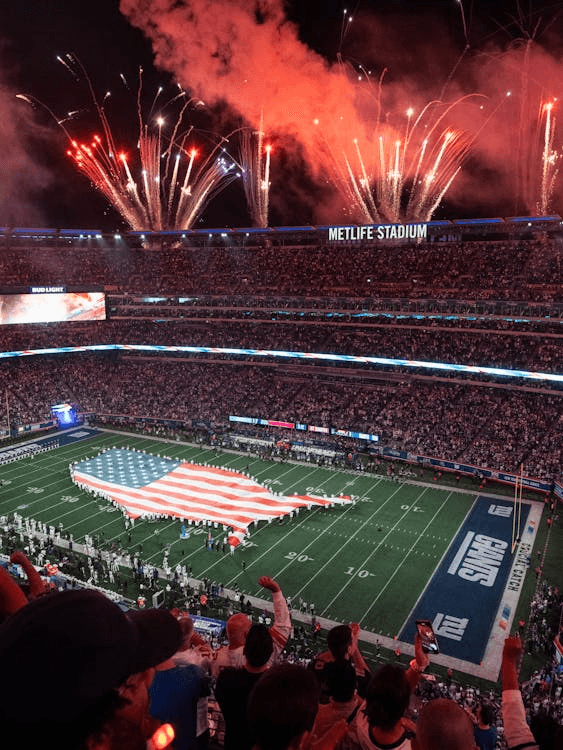
When regular-season NFL games arrived in London in 2007, some observers questioned whether there would be sufficient demand. The first game, between the New York Giants and Miami Dolphins at Wembley Stadium, was viewed as an experiment.
The experiment worked.
The crowd exceeded 80,000.
More importantly, supporters returned.
Year after year, demand increased. Games sold out. More fixtures were added. Wembley became a temporary home for American football, followed later by matches at Twickenham and the Tottenham Hotspur Stadium.
What had once seemed novel gradually became normal.
Today, attending an NFL game in London is no longer regarded as unusual. It has become part of Britain's sporting calendar.
Part of the league's success lies in understanding British sporting culture.
The NFL never attempted to replace football. It never claimed to be superior to rugby or cricket. Instead, it positioned itself as something complementary.
British supporters could follow Liverpool, Manchester United or Arsenal on Saturday and enjoy NFL action on Sunday.
There was room for both.
The timing helped enormously.
Most NFL games take place during the autumn and winter months, fitting neatly into the British sporting calendar. Sunday evenings provided a natural viewing slot for audiences looking for additional sport after a weekend of domestic football.
Gradually, habits formed.
Fantasy football leagues emerged.
Supporters selected favourite teams.
Knowledge deepened.
A generation of British fans grew up understanding the difference between a quarterback and a linebacker as comfortably as they understood a striker and a centre-half.
The personalities of the sport also played a role.
Every successful sporting competition needs stars, and the NFL has produced plenty. Players such as Tom Brady, Peyton Manning and Patrick Mahomes became recognisable figures far beyond the United States.
The rise of social media accelerated this process. British supporters no longer relied solely on television broadcasts. They could follow players, teams and journalists directly, consuming NFL content throughout the week.
The internet effectively removed geographical barriers.
What once felt distant suddenly felt accessible.
Yet perhaps the biggest reason for the NFL's success lies in the quality of the product itself.
At its best, American football offers extraordinary drama.
The league's structure promotes competitive balance. Salary caps and player drafts are designed to prevent long-term domination by a handful of wealthy teams. As a result, hope remains alive in more cities than is often the case in European football.
Supporters understand that fortunes can change quickly.
A struggling team can become a contender within a few seasons.
That unpredictability creates engagement.
The NFL also excels at storytelling.
Every season is presented as a narrative. Rivalries are carefully cultivated. Players become characters. Coaches become personalities. The league understands that sport is not merely about results; it is about emotional investment.
British sport has often relied on history to create meaning.
The NFL has become exceptionally skilled at creating it in real time.
There is also a broader cultural element at work.
For many British supporters, the NFL provides a window into American life. The Super Bowl is not simply a sporting event; it is a cultural phenomenon. The halftime show, the advertising, the pageantry and the spectacle combine to create something larger than the game itself.
Even those with limited interest in American football often find themselves paying attention.
The league has mastered the art of making every game feel important.
Perhaps that is the most significant lesson of all.
The NFL did not conquer Britain by asking people to abandon their existing sporting loyalties. It succeeded by offering something different, presenting it brilliantly and remaining patient.
Growth happened gradually.
Trust was built over time.
A fanbase was created one supporter at a time.
Today, Britain represents one of the NFL's most important international markets. Discussions about a permanent London franchise continue to surface regularly, while participation at grassroots level remains stronger than many would have predicted twenty years ago.
Whether a British-based NFL team ever becomes reality remains uncertain.
What is certain is that the league has already achieved something remarkable.
It has persuaded a nation that gave the world football, codified rugby and helped shape modern sport to embrace an American game once viewed as foreign and unfamiliar.
Few sporting organisations have managed an international expansion on that scale.
Fewer still have done it so successfully.
The NFL did not simply bring American football to Britain.
It made Britain care about it.
Related Articles
What British Sport Can Learn From American Presentation
The Weekly Sports Read
Subscribe to The Weekly Sports Read for thoughtful features, interviews and analysis from across the world of sport.
Sports Lounge Editorial
The Sports Lounge editorial team
The Sports Lounge editorial team brings together writers, former professionals and analysts who believe sport deserves thoughtful, considered conversation.