Chapter Four of The Great British Grand Prix Circuits
Every sport has moments that become larger than the event itself.
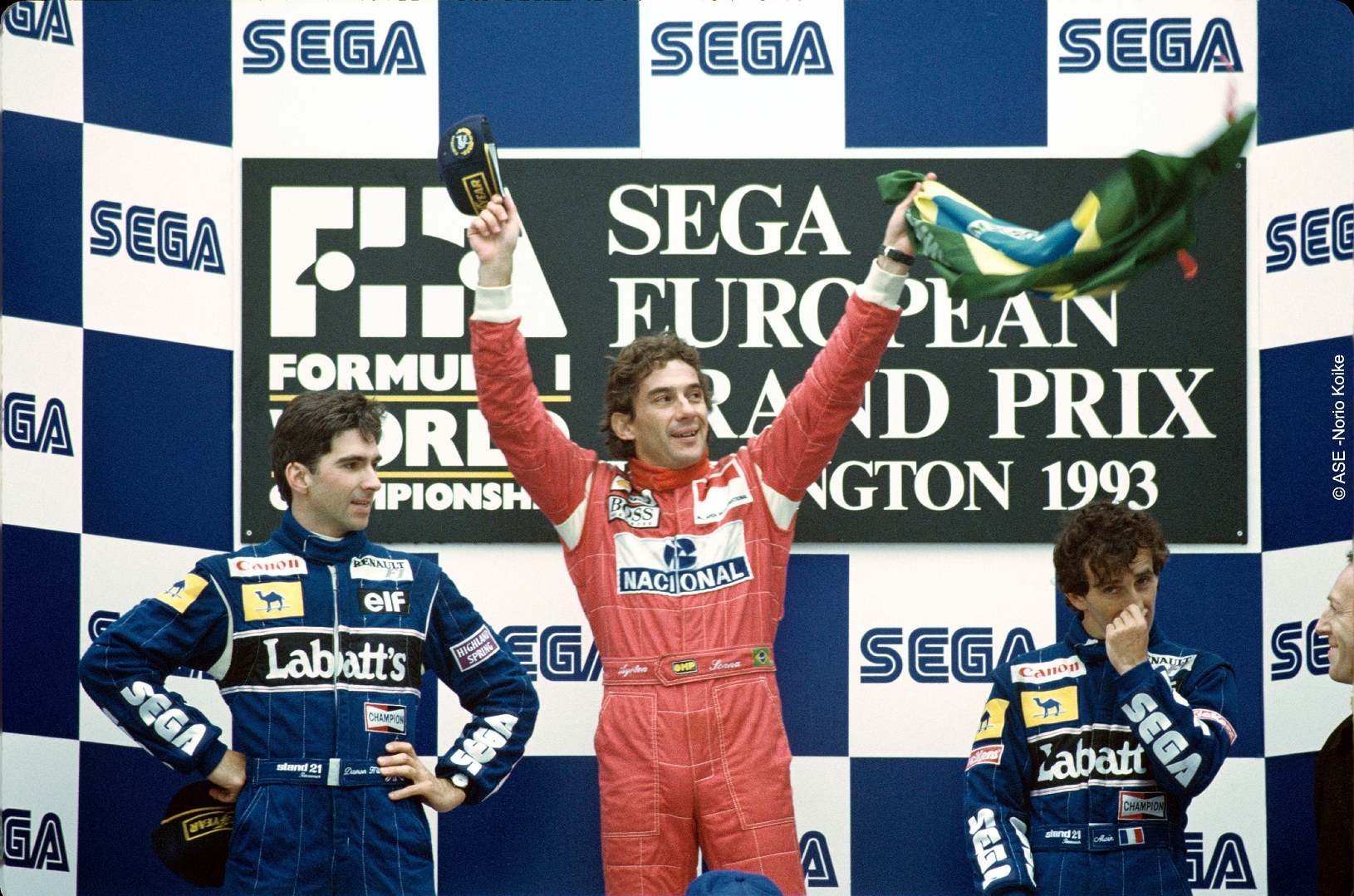
Football has Geoff Hurst in 1966. Cricket has Botham's Ashes. Rugby has Jonny Wilkinson's drop goal. Formula One has Ayrton Senna's opening lap at Donington Park in 1993.
It lasted barely four minutes.
Yet more than three decades later, it is still spoken about as one of the greatest laps ever driven by any racing driver.
Remarkably, it was also Donington Park's only Formula One World Championship race.
One race.
One unforgettable performance.
One circuit forever written into Formula One history.
Britain's First Permanent Racing Circuit
Long before Formula One arrived, Donington Park had already secured its place in British motorsport.
Located in Leicestershire, the circuit first opened in 1931, making it the first permanent purpose-built parkland racing circuit in Britain.
Unlike many early venues that relied on public roads, Donington was designed specifically for motor racing. Winding through the natural landscape of the Donington Hall estate, the circuit combined sweeping curves, dramatic elevation changes and flowing corners that rewarded rhythm rather than brute force.
During the 1930s it became famous for hosting the legendary Silver Arrows of Mercedes-Benz and Auto Union, the dominant German teams whose technological advances changed Grand Prix racing forever.
The outbreak of the Second World War brought racing to an end, and the circuit fell into disrepair before being restored by local businessman and racing enthusiast Tom Wheatcroft in the 1970s.
Without Wheatcroft's vision and investment, Donington Park might have disappeared altogether.
Instead, it became one of Britain's finest racing circuits once again.
A Surprise Return to Formula One
For decades, Donington hosted motorcycle racing, touring cars and junior single-seater championships, but Formula One seemed destined to remain at Silverstone.
That changed in 1993.
Rather than staging the British Grand Prix, Donington was awarded the European Grand Prix, bringing Formula One back to the circuit for the first—and so far only—World Championship event.
The field assembled was among the strongest in Formula One history.
Ayrton Senna.
Alain Prost.
Michael Schumacher.
Damon Hill.
Nigel Mansell, although racing in IndyCar that season, remained the benchmark against whom British fans measured everyone else.
Few expected what happened next.
The Weather Turns
Race day arrived beneath dark skies.
Rain swept across the circuit before the start, creating treacherous conditions. Some parts of the track were soaked, while others remained comparatively dry.
Drivers faced an impossible choice over tyre strategy.
Grip levels changed from corner to corner.
Visibility was poor.
For most competitors, survival became the priority.
For Ayrton Senna, it became an opportunity.
The Greatest Opening Lap?
Senna started fourth on the grid in his McLaren-Ford.
Ahead of him sat the vastly superior Williams-Renaults of Alain Prost and Damon Hill, along with Michael Schumacher's Benetton.
By the end of the opening lap, Senna led the race.
What followed has entered Formula One folklore.
He swept past Schumacher before Redgate Corner.
He outbraked Karl Wendlinger.
He surged beyond Damon Hill.
Then, approaching Melbourne Hairpin, he passed Alain Prost—the reigning World Champion driving the fastest car in Formula One.
Four overtakes.
One lap.
In appalling weather.
Commentator Murray Walker could scarcely believe what he was witnessing.
Many historians, drivers and engineers still regard it as the finest opening lap ever produced in Formula One.
It was not simply aggressive.
It was almost flawless.
A Masterclass in the Rain
Senna's brilliance did not end there.
As conditions changed throughout the afternoon, he repeatedly judged the grip levels better than anyone else.
He lapped almost the entire field.
Despite driving a car that was widely considered inferior to the dominant Williams, Senna crossed the finish line more than a minute ahead of Damon Hill.
It became his sixth and final victory in wet conditions and one of the defining performances of his extraordinary career.
A year later, Formula One would lose Senna following the tragic events at Imola.
His drive at Donington therefore stands as one of the last great reminders of his genius.
More Than One Race
Although Formula One only visited Donington once, the circuit has enjoyed an extraordinary motorsport history.
It has become one of the world's premier motorcycle venues, regularly hosting the British Superbike Championship, MotoGP and the Superbike World Championship.
It has welcomed touring cars, endurance racing, Formula Ford, Formula Three and countless national events.
The famous Craner Curves, plunging downhill at breathtaking speed, remain among the most exhilarating corners in world motorsport.
Drivers consistently describe Donington as a circuit that flows naturally.
Rather than forcing the car around artificial chicanes, Donington allows momentum to build through one corner after another.
The Formula One Dream That Never Happened
In the late 2000s, Donington appeared ready to become Formula One's permanent British home.
Circuit owner Simon Gillett secured the rights to host the British Grand Prix from 2010 onwards, promising a major redevelopment that would transform the venue into a modern Formula One facility.
Plans included new pit buildings, grandstands and infrastructure designed to rival the best circuits in the world.
Unfortunately, the project collapsed.
Funding could not be secured before construction deadlines.
The agreement was terminated, and the British Grand Prix remained at Silverstone.
For Donington, it was a bitter disappointment.
Many believed the circuit deserved another chance.
Tom Wheatcroft's Lasting Legacy
No discussion of Donington Park is complete without recognising Tom Wheatcroft.
His passion for motorsport saved the circuit when others had written it off.
He restored the venue, preserved its character and created one of the world's finest collections of historic Grand Prix cars at the Donington Grand Prix Collection, which for many years attracted visitors from around the globe.
Although the museum has since closed, Wheatcroft's contribution to British motorsport remains immeasurable.
Without him, Donington Park would almost certainly have vanished from history.
Why Drivers Love Donington
Ask professional racing drivers about Donington Park and one word appears repeatedly.
Flow.
The circuit rewards rhythm.
Every corner prepares the next.
The Craner Curves demand bravery.
The Old Hairpin tempts overconfidence.
McLeans and Coppice punish hesitation.
Unlike many modern circuits, Donington feels as though it has grown naturally from the landscape rather than being imposed upon it.
It is a driver's circuit in the purest sense.
The Sports Lounge Verdict
Donington Park hosted just one Formula One World Championship race.
For most venues, that would barely warrant a footnote in history.
Instead, Donington produced one of the greatest individual performances the sport has ever witnessed.
Ayrton Senna's astonishing drive in the rain transformed a single Grand Prix into a permanent part of Formula One folklore. It demonstrated that greatness is not always measured by championships or statistics, but by moments that leave spectators speechless.
Beyond that unforgettable afternoon in April 1993, Donington Park stands as one of Britain's greatest racing circuits—a venue shaped by history, rescued by passion and still cherished by drivers across the world.
Its place in Formula One history may have lasted only one race.
Its legacy will endure forever.
Sports Lounge Editorial
The Sports Lounge editorial team
The Sports Lounge editorial team brings together writers, former professionals and analysts who believe sport deserves thoughtful, considered conversation.