Chapter Two of The Great British Grand Prix Circuits
When people think of Aintree, one event immediately comes to mind: the Grand National. Every spring, millions around the world tune in to watch horse racing's most famous steeplechase, with its legendary fences, dramatic finishes and stories of triumph and heartbreak.
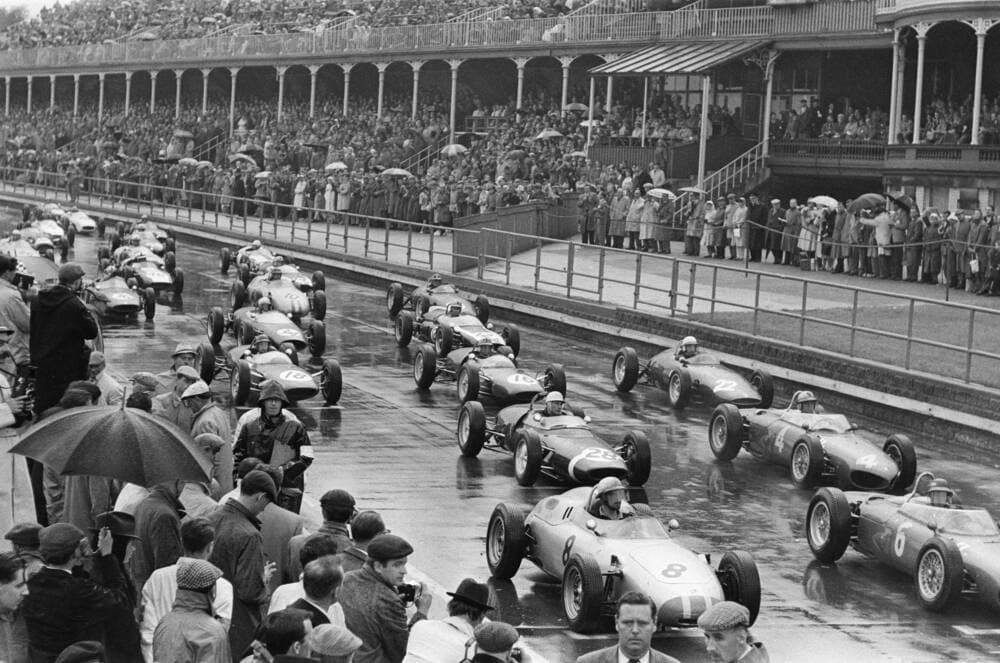
Yet for a remarkable period during the 1950s and early 1960s, Aintree Racecourse was home to another sporting spectacle. Formula One's greatest drivers raced wheel-to-wheel on a purpose-built circuit inside the famous racecourse, and Liverpool briefly became one of the most important cities in world motorsport.
Today, few outside dedicated Formula One historians remember that the British Grand Prix was once held on Merseyside. It is one of British sport's most overlooked chapters—a story of innovation, local pride and world-class competition that deserves to be remembered.
A New Vision for Aintree
Following the Second World War, Britain was embracing motorsport like never before. Circuits such as Silverstone had demonstrated that Formula One could attract huge crowds, while the success of the World Championship fuelled growing public interest.
The owners of Aintree Racecourse believed they could offer something different.
Rather than relying solely on horse racing, they commissioned a modern motor racing circuit to be built within the infield of the famous National course. Designed by Major-General Harry M. S. Budding, the 3-mile (4.828 km) circuit was fast, wide and technically demanding. It quickly earned a reputation as one of Europe's finest permanent racing venues.
When it officially opened in 1954, many believed Britain now had a second circuit capable of hosting the world's greatest drivers.
They were right.
Formula One Comes to Liverpool
Aintree first hosted the British Grand Prix in 1955, just five years after Formula One's inaugural World Championship race at Silverstone.
The arrival of Formula One transformed Liverpool into an international sporting destination. Fans travelled from across Britain and Europe to watch the sport's biggest names compete at one of the world's newest circuits.
At the time, Formula One was still establishing its identity. The cars were front-engined, mechanically demanding and unforgiving to drive. Reliability was often as important as outright speed.
The 1955 British Grand Prix would become one of the most significant races in Formula One history.
Stirling Moss Makes History
No story about Aintree can begin anywhere other than with Stirling Moss.
Driving for Mercedes-Benz alongside the legendary Juan Manuel Fangio, Moss arrived as Britain's brightest young racing talent. Despite his obvious speed, he had yet to win a Formula One World Championship race.
That changed at Aintree.
In front of a passionate home crowd, Moss drove a superb race to beat Fangio and claim his first Formula One victory. The Mercedes team completed an extraordinary 1-2-3-4 finish, underlining their dominance of the era.
For British motorsport, it was a defining moment.
A British driver had finally won his home Grand Prix.
Moss would later describe the victory as one of the proudest moments of his remarkable career, and many historians still regard the 1955 British Grand Prix as one of the most important races ever staged on British soil.
The Vanwall Revolution
If 1955 belonged to Stirling Moss, then 1957 belonged to British engineering.
Driving the revolutionary Vanwall alongside Tony Brooks, Moss shared driving duties after Brooks developed mechanical issues early in the race—a legal practice under Formula One regulations at the time.
Together they secured victory.
It was far more significant than another Grand Prix win.
For the first time in Formula One World Championship history, a British-built car, powered by a British engine and driven by British drivers, had won the British Grand Prix.
The achievement symbolised Britain's growing strength in motorsport engineering and marked the beginning of a period in which British constructors would become the dominant force in Formula One.
Many historians view that afternoon at Aintree as the true birth of Britain's modern Formula One industry.
A Circuit Drivers Loved
Unlike some circuits of the era, Aintree rewarded precision rather than sheer bravery.
The layout combined long straights with sweeping bends that demanded smooth driving and intelligent racecraft. Drivers praised its wide racing surface, which encouraged overtaking at a time when passing was often difficult.
Although overshadowed by Silverstone in later years, many competitors considered Aintree one of Britain's finest circuits.
It possessed an elegance that reflected its surroundings.
Where horse racing celebrated tradition, Formula One represented modern engineering. For a few remarkable years, both sports existed side by side at one of Britain's most famous sporting venues.
Jim Clark's Farewell Victory
Aintree hosted the British Grand Prix five times—in 1955, 1957, 1959, 1961 and 1962—sharing the event with Silverstone as Formula One's popularity continued to grow.
Its final Grand Prix in 1962 was won by Scotland's Jim Clark, driving for Lotus.
Clark was already establishing himself as one of the greatest natural talents the sport had ever seen. His victory at Aintree would be remembered not only as another step towards future World Championships, but also as the last Formula One World Championship race ever held on Merseyside.
Few realised they were witnessing the end of an era.
Why Formula One Left Liverpool
The obvious question is why such a successful venue disappeared from the Formula One calendar.
The answer was largely economic.
By the early 1960s, Formula One was expanding rapidly. Larger crowds required greater investment in facilities, safety improvements and infrastructure.
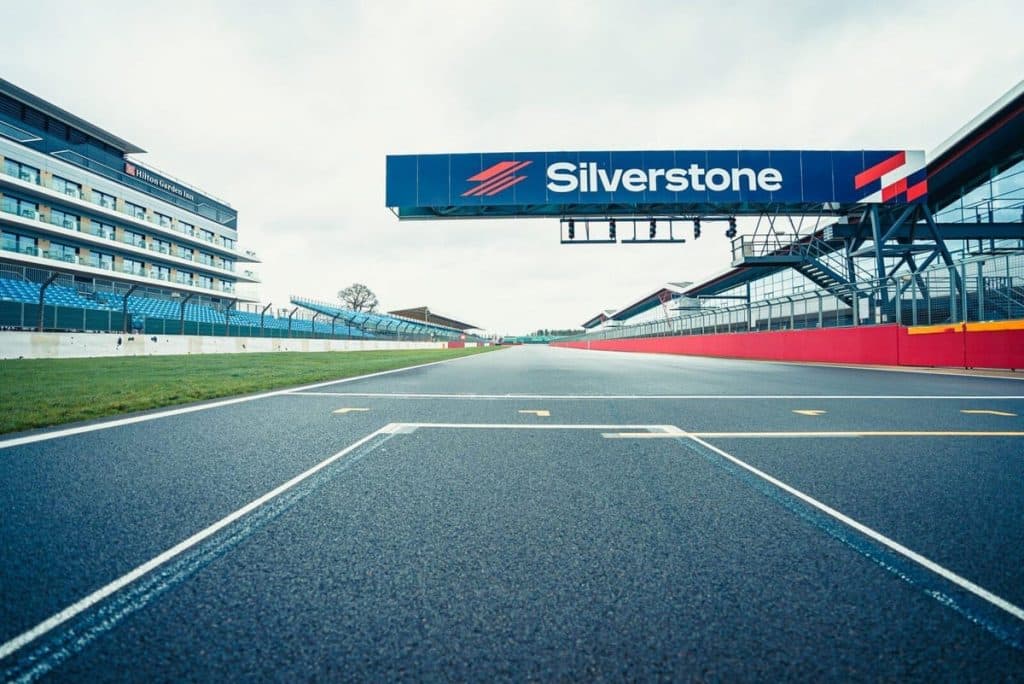
Silverstone, supported by the Royal Automobile Club, was better positioned for long-term development.
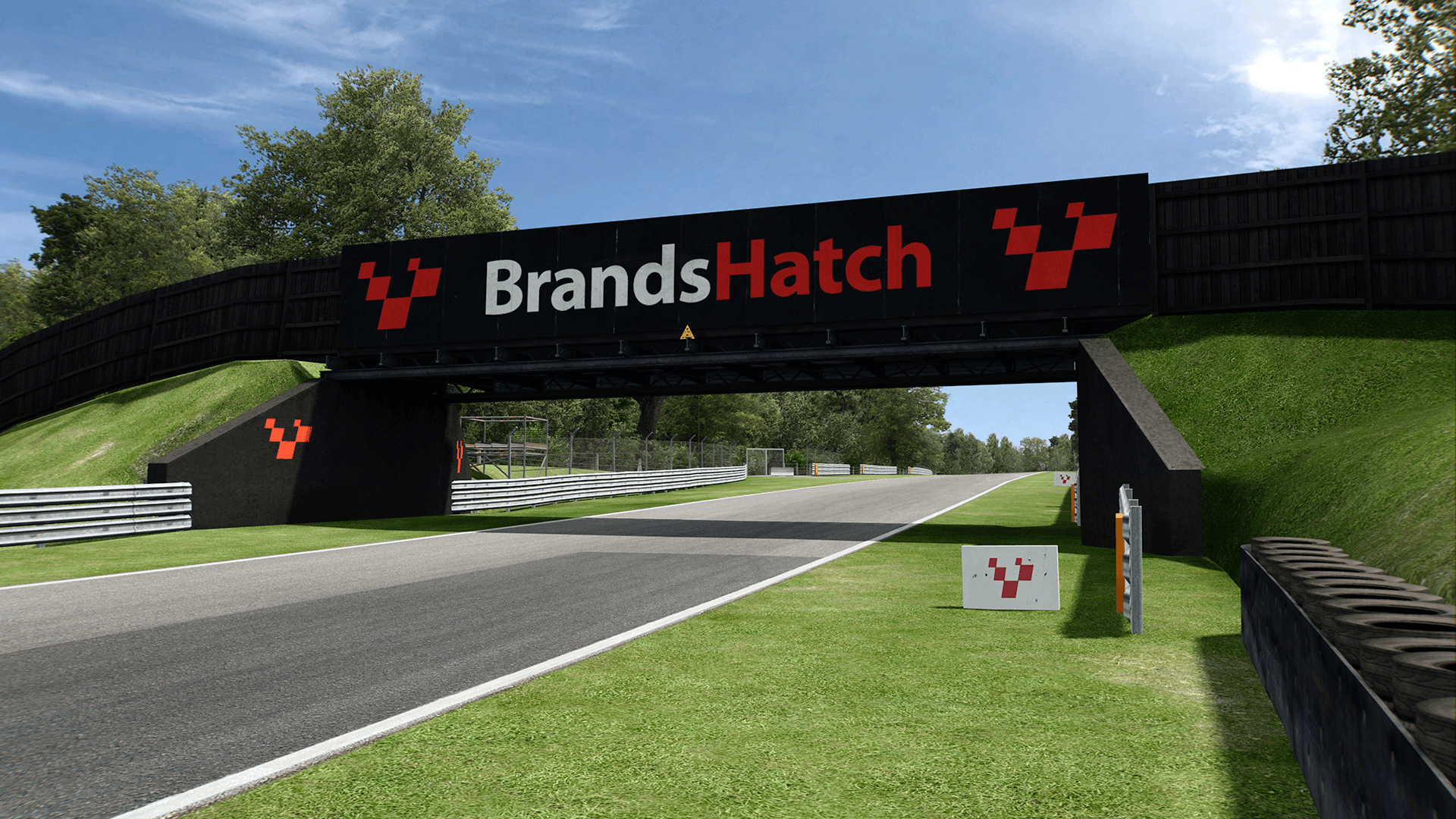
Brands Hatch was also emerging as a modern venue capable of attracting major events, and from 1964 the British Grand Prix began alternating between Silverstone and Brands Hatch instead.
Without regular Formula One income, motor racing at Aintree gradually declined.
The circuit remained active for club racing before eventually closing to professional competition.
What Remains Today
Although Formula One has long since departed, Aintree's motor racing heritage has not disappeared entirely.
Parts of the original circuit still survive within the racecourse complex. Visitors who know where to look can still trace sections of the old layout, imagining the days when Moss, Fangio and Clark raced across the Merseyside tarmac.
The Grand National naturally dominates the site's identity today, but beneath that famous history lies another remarkable sporting story waiting to be rediscovered.
For Liverpool, Aintree represents something unique.
Few cities can claim to have hosted both the world's greatest horse race and a Formula One World Championship Grand Prix.
Liverpool's Place in Motorsport History
Liverpool is rarely mentioned alongside Monza, Monaco, Silverstone or Spa-Francorchamps when discussing Formula One history.
Perhaps it should be.
Aintree played a crucial role during Formula One's formative years. It produced Stirling Moss's first World Championship victory, witnessed Britain's first home Grand Prix success by a British driver, celebrated British engineering with Vanwall's historic triumph and provided one of the finest circuits of its generation.
These were not minor footnotes.
They were milestones in the development of Formula One as a global sport.
A Legacy Worth Celebrating
Modern Formula One is driven by billion-pound teams, global manufacturers and races watched by hundreds of millions of viewers.
The Aintree years remind us that the championship was once smaller, more intimate and deeply connected to local communities.
Spectators stood close to the action. Drivers were approachable. The paddock felt less like a corporate village and more like a gathering of extraordinary competitors pushing themselves—and their machines—to the limit.
Liverpool became part of that remarkable story.
It deserves greater recognition than it often receives.
The Sports Lounge Verdict
When Formula One history is discussed, attention naturally falls on Silverstone, Monaco, Monza and Spa. Yet Aintree deserves to stand proudly alongside them as one of the circuits that helped shape the World Championship's early years.
For just seven seasons, Liverpool welcomed the finest drivers and fastest cars on earth. In that brief period, it witnessed Stirling Moss's breakthrough, Britain's engineering coming of age through Vanwall and Jim Clark's farewell victory before Formula One moved on.
Today, the roar of V6 hybrid engines has been replaced by the thunder of hooves each April, but Aintree's contribution to Formula One should never be forgotten.
Liverpool did not simply host Formula One.
For a crucial chapter in the sport's history, it helped define it.
Next in the series: Brands Hatch – Britain's Rollercoaster, the circuit that challenged drivers, thrilled spectators and shared the British Grand Prix with Silverstone for more than two decades.
Sports Lounge Editorial
The Sports Lounge editorial team
The Sports Lounge editorial team brings together writers, former professionals and analysts who believe sport deserves thoughtful, considered conversation.