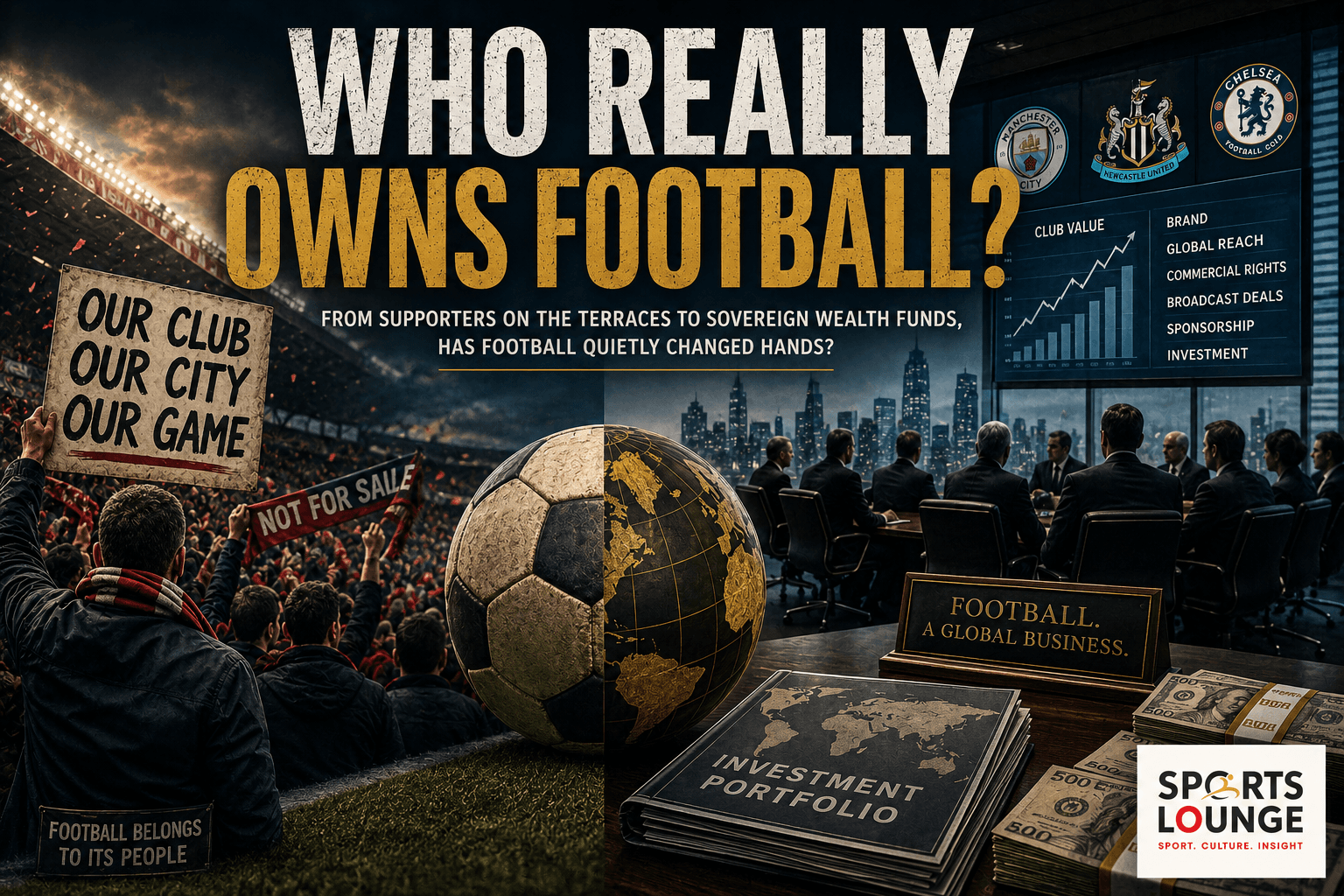
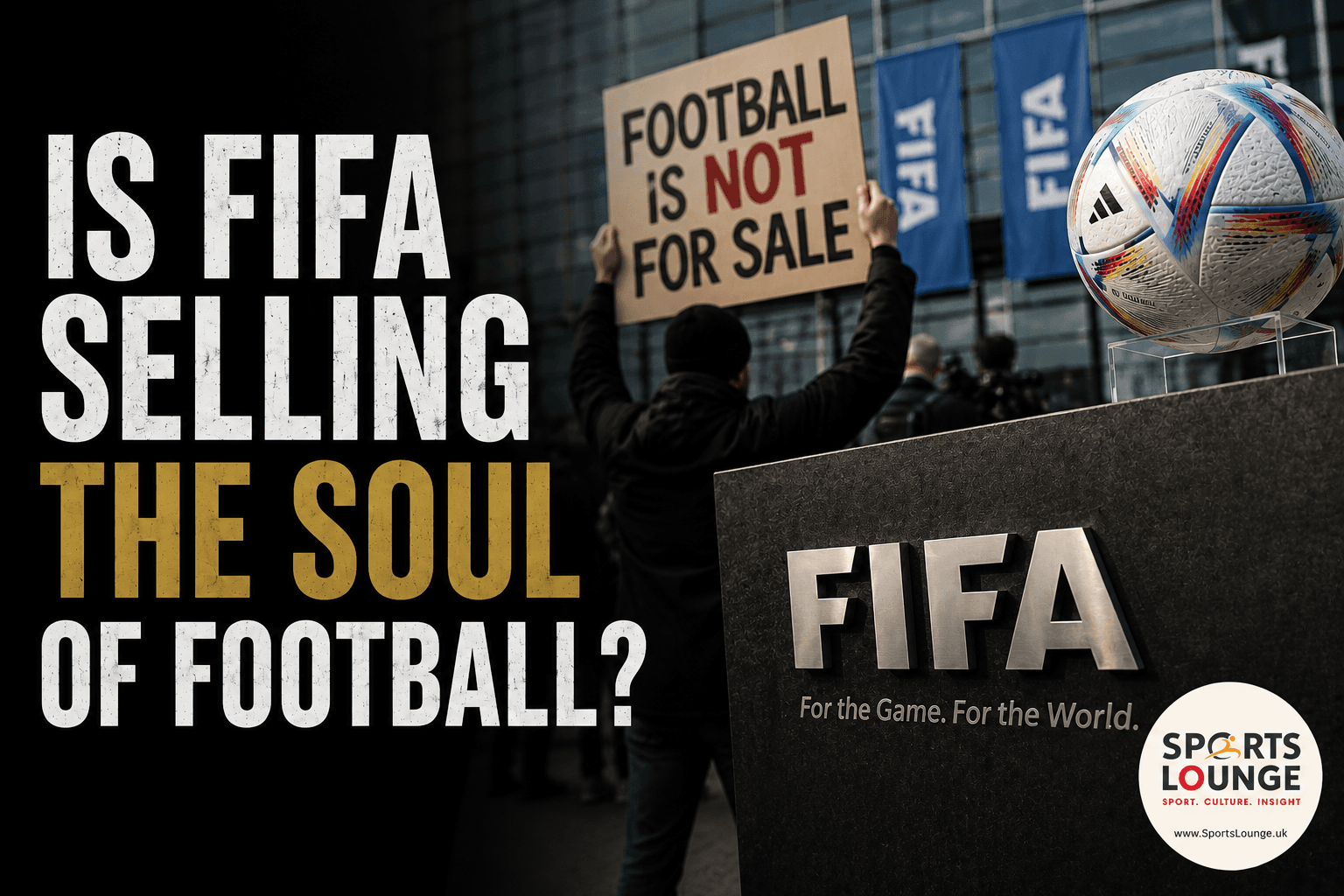
For more than a century, football has belonged to nobody and everybody at the same time.
That simple idea has been at the heart of the world's game. Clubs belong to communities. National associations govern within their own borders. Continental bodies such as UEFA, CONMEBOL and the AFC organise competitions. Above them all sits FIFA – not as an owner, but as the game's custodian.
It is a distinction that has always mattered.
This week, however, FIFA has proposed one of the most controversial changes in modern football governance, announcing plans to create a new commercial company, FIFA Forward Enterprise (FFE), which would hold the commercial rights to the FIFA World Cup, Women's World Cup, Club World Cup and other major competitions. FIFA would then seek outside investment by selling a minority stake in that company while retaining control of football governance. The proposal could value the new business at around US$20 billion and raise more than US$4 billion for global football development.
On paper, it is a corporate restructuring.
In reality, many believe it represents something far bigger.
Why FIFA Wants to Do It
To understand the proposal, you first have to understand FIFA's changing role.
Unlike Europe's leading clubs, FIFA only stages a handful of competitions. Yet those tournaments generate extraordinary commercial revenues through broadcasting, sponsorship, ticketing and licensing.
President Gianni Infantino argues that those revenues should benefit every corner of the football world, not simply the wealthiest nations. His vision is straightforward: bring in private investment today, unlock billions of pounds of new capital, and redistribute that money across FIFA's 211 member associations to build facilities, improve coaching and develop the game in emerging football nations.
It is a compelling argument.
Many associations across Africa, Asia, Oceania and the Caribbean operate on tiny budgets compared with Europe. For them, an additional injection of funding could transform grassroots football for a generation.
Viewed through that lens, FIFA presents the proposal not as privatisation, but as democratisation.
The Traditional View of Football
Yet football has never been judged solely on commercial logic.
The sport's governing bodies were created to protect competitions, not monetise them.
For generations, supporters have accepted that FIFA exists to organise the World Cup, protect the Laws of the Game and promote football globally. It was never expected to behave like a multinational corporation seeking investment partners.
That is why UEFA's response was so fierce.
Its statement described the proposal as crossing "a line that football's governing institutions should never cross", adding that "the soul and governance of football are not assets to trade."
Whether one agrees with UEFA or not, the language was remarkable.
It was not simply criticism.
It was a declaration that football's governing model itself is under threat.
Where the Politics Become Interesting
This debate is not only about money.
It is also about power.
Every FIFA President is elected by national associations, with each member receiving one vote regardless of its footballing strength.
Germany has one vote.
England has one vote.
Brazil has one vote.
So does San Marino.
So does Fiji.
So does the Cayman Islands.
That democratic structure has always been one of FIFA's defining characteristics. It ensures that football is governed globally rather than by its wealthiest nations.
Critics, however, argue that it also creates political realities that cannot be ignored.
Infantino's strongest support has often come from developing football nations, many of whom would benefit most from increased FIFA development funding. If the proposed investment unlocks billions of dollars that flow directly into those associations, many observers believe it is hardly surprising that significant backing exists outside Europe. Earlier this month, more than 200 FIFA member associations formally endorsed Infantino for another presidential term, underlining the breadth of his global support.
That does not mean those votes are "bought"—there is no evidence to suggest that.
But politics and finance have always been closely linked in international sport.
Those associations genuinely need investment.
FIFA is offering it.
The political consequences are obvious.
Europe Draws a Line in the Sand
Europe, however, sees the issue rather differently.
The continent remains football's economic engine.
Its leagues attract the world's biggest audiences.
Its clubs generate the highest revenues.
Its competitions set the sporting standards.
The Premier League, Champions League, Bundesliga, La Liga and Serie A collectively drive much of football's global commercial value.
Without European football, there is no modern football economy.
That is why UEFA's opposition carries such significance.
European football is effectively arguing that while football is unquestionably a global game, its commercial heartbeat still lies in Europe. Decisions affecting the future of the sport cannot simply be driven by a numerical majority of member associations if they fundamentally alter the nature of football governance.
For UEFA, this is not merely another disagreement with FIFA.
It is a constitutional argument about who football ultimately belongs to.
A Dangerous Precedent?
Supporters of the proposal point out that investors would hold only a minority stake and would have no formal control over football governance.
That may be true.
Yet investors do not commit billions without expecting long-term returns.
History suggests that wherever private capital enters sport, commercial expectations inevitably follow.
Bigger tournaments.
More matches.
Additional competitions.
Greater pressure to maximise broadcasting income.
Those outcomes may or may not happen here, but they explain why so many traditionalists remain uneasy.
The concern is less about what happens in year one than what football looks like twenty years from now.
Football's Biggest Test Off the Pitch
This debate reaches beyond balance sheets and investment valuations.
It asks a simple but profound question.
What is FIFA?
Is it simply the governing body responsible for developing football everywhere, using every commercial tool available?
Or is it the guardian of a global sporting institution that should never place even a small part of the World Cup's commercial future into the hands of outside investors?
Reasonable people will disagree.
FIFA believes it is building a stronger financial future for every nation.
UEFA believes it is defending the principles on which football has always been governed.
The coming months may prove to be one of the defining moments in the history of modern football.
For decades, arguments about the future of the game have centred on VAR, financial regulation, the Champions League or the Club World Cup.
This feels different.
Because this time, the question is not how football is played.
It is who, ultimately, owns the commercial future of the world's greatest game.
Majid Lavji
Founder & Editor
Majid Lavji is the Founder and Editor of Sports Lounge. With more than 30 years of experience across sport, media and business, he is passionate about telling the stories behind the games we love. Through Sports Lounge, he aims to provide intelligent, engaging sports journalism that values insight, history and context as much as results and headlines.