
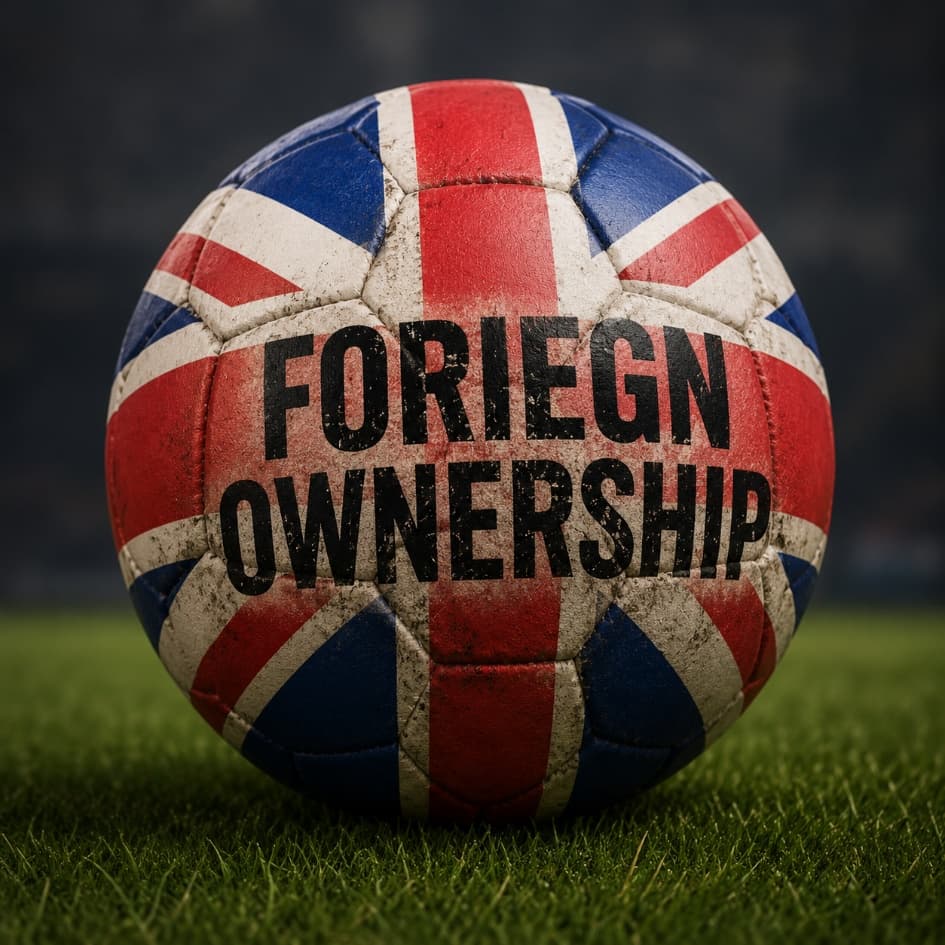
Ask a football supporter what makes their club special, and the answer rarely begins with balance sheets.
They will talk about memories.
A first match with a parent or grandparent. The old stadium that no longer exists. Legendary players whose names still echo through generations. Famous victories. Painful defeats. Shared experiences that become part of a family's story.
For more than a century, football clubs were woven into the fabric of communities. They were founded by churches, factories, railway workers and local groups. Clubs belonged to places and, in many ways, they belonged to people.
Yet modern football increasingly raises a different question.
Who does a football club really belong to?
The answer has become far more complicated than it once was.
Ownership has always mattered in sport, but never quite as much as it does today. In the modern era, the owner often determines not only a club's financial future but its identity, ambitions, values and relationship with supporters.
In many respects, ownership now shapes the soul of a club.
Consider the transformation of Manchester City F.C. following the takeover by Abu Dhabi United Group in 2008.
Few would dispute that the club has been transformed on the pitch. Multiple Premier League titles, domestic dominance and a long-awaited Champions League triumph have elevated City into one of world football's elite institutions.
Yet the transformation has gone far beyond trophies.
The ownership fundamentally altered how the club operates, invests and presents itself globally. Training facilities, youth development, commercial partnerships and international expansion all became part of a long-term vision that extended well beyond football itself.
Supporters gained success, but the club itself became something different.
Whether one views that positively or negatively often depends on perspective.
A similar debate has surrounded Newcastle United F.C. since the Saudi-backed takeover in 2021.
For years, many supporters felt frustrated by stagnation under previous ownership. The arrival of significant investment brought optimism, ambition and renewed hope. St James' Park once again became a place where supporters could dream.
Yet the takeover also sparked wider questions about ownership, influence and the ethical responsibilities of football clubs operating on a global stage.
These conversations would have seemed unusual thirty years ago.
Today they are impossible to avoid.
Football's relationship with ownership has become increasingly complex because clubs have evolved from local institutions into global assets.
In previous generations, owners were often local businessmen or families with close ties to the community. They were visible figures whose successes and failures were experienced alongside supporters.
That model still exists in places, but it has become increasingly rare at the highest level.
Modern football ownership can involve sovereign wealth funds, multinational corporations, American private equity groups and investors located thousands of miles from the cities their clubs represent.
The Premier League perhaps illustrates this better than any other competition.
American investors now have ownership interests in several major clubs, including Liverpool F.C., Arsenal F.C. and Chelsea F.C..
Their approaches differ, but they share one common characteristic.
They view clubs not simply as sporting institutions, but as businesses.
That is not necessarily a criticism.
Professional sport has always required financial discipline. Clubs that ignore commercial realities rarely survive for long. The challenge arises when business priorities and supporter expectations begin pulling in different directions.
Few episodes demonstrated this tension more clearly than the proposed European Super League in 2021.
The project was presented by its architects as a commercial necessity designed to secure long-term financial stability. Yet supporters across Europe saw it differently. To many, it represented an attempt to prioritise revenue over competition, tradition and sporting merit.
The backlash was immediate.
Fans protested outside stadiums. Former players criticised the plans. Politicians became involved. Within days, several clubs had withdrawn.
The episode served as a powerful reminder that football clubs may be businesses, but they are also cultural institutions.
Owners ignore that reality at their peril.
The most successful ownership groups often understand this balance.
At Liverpool, Fenway Sports Group has occasionally faced criticism from supporters, yet few would dispute the transformation achieved under their stewardship. The club moved from financial uncertainty to sustained success under Jürgen Klopp, while major investments in infrastructure helped modernise both Anfield and the club's wider operations.
What made that period successful was not simply spending money.
It was creating alignment.
Supporters, management and ownership largely shared a common vision.
When that alignment exists, clubs tend to thrive.
When it breaks down, problems quickly emerge.
History is full of examples.
Many supporters can recall owners who promised transformation but delivered instability. Others arrived with grand ambitions only to discover that running a football club requires more than wealth.
Money helps.
Leadership matters more.
That lesson extends far beyond football.
Across rugby, cricket and other sports, ownership increasingly shapes strategic direction. Investment decisions influence everything from academy development and facilities to recruitment, branding and supporter engagement.
The modern sports owner has become one of the most influential figures in the game.
Yet perhaps the most interesting development is how supporters themselves have changed.
Today's fans are more informed than ever before. They understand financial fair play regulations. They discuss transfer budgets, sponsorship agreements and commercial revenues with remarkable sophistication.
A generation ago, supporters primarily analysed tactics and team selections.
Today they analyse ownership structures.
That shift reflects a growing recognition that decisions made in boardrooms increasingly shape what happens on the pitch.
The reality is that ownership now influences almost every aspect of modern sport.
It influences ambition.
It influences culture.
It influences identity.
Most importantly, it influences trust.
Supporters may not expect perfection from owners, but they expect honesty, competence and a genuine understanding of what their club represents.
Because while football clubs have become global brands, they remain deeply emotional institutions.
The people sitting in boardrooms may change.
Managers come and go.
Players are bought and sold.
But supporters remain.
They are the constant.
That is why ownership matters so profoundly.
It is not simply about financing transfers or building new stadiums. It is about stewardship. It is about recognising that a football club is more than a business asset.
It is a living institution carrying decades, sometimes centuries, of history.
The best owners understand this.
They see themselves not as owners in the traditional sense, but as custodians.
Temporary guardians of something that will outlive them.
Perhaps that is the most important lesson of modern sport.
The question is no longer whether ownership matters.
It clearly does.
The question is whether those entrusted with football's greatest institutions understand what they are truly responsible for preserving.
Because in today's game, ownership does not simply shape the future of clubs.
Increasingly, it shapes their soul.
Majid Lavji
Founder & Editor
Majid Lavji is the Founder and Editor of Sports Lounge. With more than 30 years of experience across sport, media and business, he is passionate about telling the stories behind the games we love. Through Sports Lounge, he aims to provide intelligent, engaging sports journalism that values insight, history and context as much as results and headlines.